
If an older adult is in immediate danger, call 911. If the danger is not immediate but something is wrong — unexplained bruises, a bedsore, sudden weight loss, money leaving an account — call Adult Protective Services in the state where that person lives, then write down what you saw and the date. Reporting is free, you do not need proof, and most states accept anonymous reports.
A lawyer comes after that, and not in every case. APS investigates and can arrange protective services; it cannot recover money, force a nursing home to produce staffing records under oath, or file a claim for your family. What follows covers what elder abuse lawyers do, when hiring one is worth it, what a contingency fee really costs, and why your filing deadline is shorter than you think.
This is general information, not legal advice. Elder abuse law is largely state law — deadlines, damages limits, and what counts as neglect all change at the state line. Speak with an attorney licensed where the abuse occurred.
If you suspect abuse right now
- Immediate danger or serious injury: call 911.
- Adult Protective Services: report to the APS agency in the state where the older adult lives. The National Adult Protective Services Association keeps a state-by-state directory.
- Fraud or financial exploitation: the National Elder Fraud Hotline, 833-FRAUD-11 (833-372-8311), run by the Justice Department’s Office for Victims of Crime, Monday to Friday, 10 a.m. to 6 p.m. Eastern.
- Nursing home or assisted living: contact that facility’s Long-Term Care Ombudsman. Every state runs one under the Older Americans Act; find yours through the Eldercare Locator at 1-800-677-1116.
- Preserve, do not tidy up. Photograph injuries and conditions, keep originals, note names and exact quotes while they are fresh.
Do this before calling a lawyer. It is free, it creates an official record, and whether one exists is among the first things an attorney will ask.
The scale is not in dispute. According to the CDC, roughly 1 in 10 older adults living at home experience abuse, neglect, or exploitation, and assault injuries to adults 60 and older cost nearly $33 billion in 2022. The National Center on Elder Abuse cites research finding nearly 24 undetected cases for every one reported, and that only 1 in 44 financial exploitation cases receives formal supportive services. The FBI’s Internet Crime Complaint Center reported victims aged 60 and over lost nearly $5 billion to internet-enabled fraud in 2024, more than any other age group.
| Type | Warning signs | Evidence that matters |
|---|---|---|
| Physical abuse | Patterned bruises, grip marks on upper arms, fractures from “unwitnessed falls,” restraint marks, repeat ER visits at different hospitals | Dated photos, ER and imaging records, incident reports, nursing notes for the 72 hours either side |
| Emotional abuse | Withdrawal, fear around one caregiver, sudden agitation, being spoken for, isolation from family | Dated incident log with direct quotes, statements from other residents or staff, records of blocked calls and visits |
| Sexual abuse | Unexplained STI, genital injury, torn or bloodstained underclothing, new fear of bathing or dressing | Immediate medical exam, the record documenting findings, police report, staffing schedules showing who had access |
| Financial exploitation | New joint account holder, a power of attorney signed during hospitalization, unusual withdrawals, a rewritten will, unpaid bills despite income | Bank and brokerage statements, the signed POA or deed with its date, capacity assessments from that period, notary logs |
| Neglect | Pressure ulcers, dehydration, recurrent UTIs, weight loss, soiled bedding, missed medications | Complete chart including the medication administration record and repositioning logs, weight and wound-care notes, staffing schedules, inspection history |
| Abandonment | Left at an ER or public place, a caregiver who stops appearing, a resident with no reachable responsible party | Admission and discharge paperwork, written communications from the caregiver, the APS report, documents showing legal responsibility |
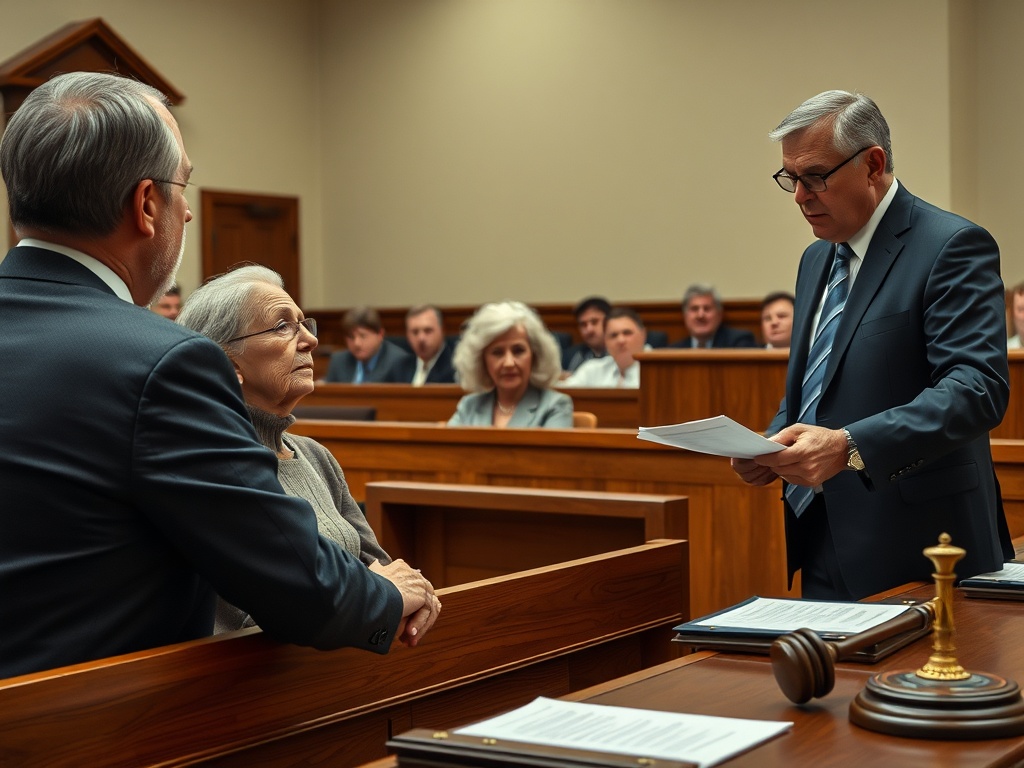
What an elder abuse lawyer actually does
An elder abuse lawyer is a civil litigator. The job is not to get anyone arrested — that belongs to prosecutors — but to build a claim for money damages against whoever caused the harm: a nursing home, an assisted living operator, a home health agency, a hired caregiver, or a relative who emptied an account.
Most of the work happens before anything is filed. The lawyer sends a preservation letter so a facility cannot quietly overwrite electronic charting, demands the complete record rather than the summary offered, pulls staffing schedules and incident reports, and hires a geriatric nurse or physician to judge whether a pressure ulcer was avoidable. In financial cases they trace bank records and compare the date a power of attorney was signed against the medical chart from that week. Criminal charges and a civil suit can run in parallel; an acquittal does not end the lawsuit, because the civil burden of proof is lower.
When APS is enough, and when you need a lawyer
APS is often the only call you need when the problem is a living situation that needs fixing rather than a harm that needs compensating — a neighbor who is not eating, a caregiver who is overwhelmed rather than malicious. APS can investigate, arrange services, and refer for guardianship. It cannot recover money or represent your family. The cases where an attorney earns their fee look different:
- Death, or injury serious enough to change a life: stage 3 or 4 pressure ulcers, sepsis, fractures from unwitnessed falls, severe dehydration, a resident who wandered out of a locked unit
- Any allegation of sexual assault
- Substantial financial losses, or a deed, will, or power of attorney signed when capacity was already in question
- A facility that stalls on records, changes its story, or has already brought in its insurer
- An arbitration clause buried in the admission packet, which can waive the right to a jury trial
A common pattern: after a family complains, the facility starts paperwork to discharge the resident. Involuntary discharge is the most common complaint category handled by ombudsman programs, which initiated 202,894 complaints in fiscal 2023, according to the Administration for Community Living. Discharge appeals go to the ombudsman and the state survey agency, not an injury firm — closer to what an eviction lawyer does for tenants.
Evidence to preserve before it disappears
These cases are won and lost in the chart, and electronic records carry metadata showing when each entry was made and by whom. That is why a preservation letter matters early.
- Photograph injuries and room conditions with the date visible; re-photograph wounds as they change
- Keep a dated log of what you saw, who you spoke to, and what you were told would happen
- Request the complete medical record in writing, and keep a copy of the request
- Keep originals — bank statements, the admission packet, signed forms — and hand out copies
- Write down roommates, visitors, and staff on duty; turnover in this industry is fast
- Do not confront a suspected abuser, and do not sign any release a facility hands you

What these cases cost and how contingency fees work
Nearly every firm in this field works on contingency: nothing hourly, and the fee is a percentage of what is recovered. Published schedules across the plaintiff bar typically fall between one-third and 40 percent, usually on a sliding scale — roughly a third if the matter settles before suit, stepping toward 40 percent through trial or appeal. The structure is standard across injury practice; a maritime lawyer handling an injured seaman’s claim bills the same way.
Here is what the billboards leave out. “No fee unless we win” covers the attorney’s fee. It does not cover case costs: filing fees, record retrieval charges, deposition transcripts, investigators, exhibits, and above all expert witnesses. A nursing expert and a physician reviewer are close to mandatory in a neglect case, and expert time is usually the largest line item in the file. The firm advances those costs and is reimbursed from the recovery.
Ask two questions before signing, and get both answers in writing. Are costs deducted before or after the percentage fee is calculated? Deducting first leaves you meaningfully more. And if we lose, do I owe the costs? Many firms absorb them; some do not, and the gap runs into five figures. Ask about liens too — Medicare, Medicaid, and private plans often must be repaid from a settlement, and that comes off your share, not the lawyer’s. Several states also cap attorney fees in medical malpractice claims, so ask whether your case will be pleaded as ordinary negligence or health care liability; the label can change the fee rules, the deadline, and whether an expert affidavit is required to file at all.
Deadlines vary by state, and they are short
The statute of limitations is set by state law and there is no national number. Three examples show the spread:
- Florida: two years for an action founded on negligence under Fla. Stat. section 95.11, after 2023 tort reform halved the old four-year window. Medical malpractice runs two years from the incident or its discovery, with a four-year outer limit.
- California: two years for injury or death caused by another’s wrongful act or neglect, under Code of Civil Procedure section 335.1. Against a health care provider, section 340.5 controls instead: three years from injury or one year from discovery, whichever expires first.
- New York: three years for personal injury under CPLR 214, but two years and six months for medical, dental, or podiatric malpractice under CPLR 214-a.
Traps sit on top of those numbers. Wrongful death usually runs from the date of death, not the injury. Claims against a county, state, or VA facility often require a formal notice of claim within months — miss it and the case ends regardless of merit. Confirm your own deadline with a licensed attorney in your state, and do it early: a lawyer handed your file three weeks before the deadline may decline it for lack of time alone.
What compensation can cover
Recoverable categories generally include medical expenses caused by the abuse, the cost of moving to a safer facility, pain and suffering, and in a death case funeral costs and the survivors’ loss of companionship. Financial exploitation claims can seek return of stolen funds and, separately, an action to void a deed, beneficiary change, or power of attorney obtained by undue influence. Punitive damages are possible where conduct was reckless rather than careless, though most states cap them or demand a heightened standard of proof. A few states go further: California’s Welfare and Institutions Code section 15657 requires a court to award reasonable attorney’s fees and costs when abuse, neglect, or abandonment is proved by clear and convincing evidence involving recklessness, oppression, fraud, or malice.

How to evaluate an elder abuse lawyer
Consultations are almost always free, so take more than one. The vetting is what you would do to find the best divorce lawyer or any specialist: check the license, look at the real caseload, learn who does the work.
- Verify the license and disciplinary history in your state bar’s public directory. Two minutes, non-negotiable.
- Ask how many nursing home cases the firm has taken to trial, not settled. Insurers price cases partly on that.
- Ask who handles the file daily and whether it will be referred to another firm, and how the fee splits.
- Walk away from anyone who guarantees a result or quotes a figure before reading the records.
- If cost is the barrier, try your state bar’s referral service and your Area Agency on Aging.
Note that “elder law attorney” and “elder abuse attorney” are different jobs. Elder law covers estate planning, Medicaid eligibility, and guardianship. Abuse litigation is a personal injury discipline. Some firms do both; many do not.
What the process actually looks like
Intake and record collection typically take one to three months, and the facility rarely helps. A nurse or physician expert then reviews the file, and that review — not the family’s account — decides whether the case goes forward. Plenty of genuinely upsetting files are declined here because the chart documents an unavoidable decline rather than a preventable one.
Cases that clear review often open with a pre-suit demand and settle without a filing. The rest enter discovery: written questions, document production, and depositions of the administrator, the director of nursing, and the aides on shift, which is where understaffing surfaces. Most then resolve at mediation; a minority reach a jury. One to three years is typical. Families are rarely prepared for the emotional weight — depositions mean reliving the worst weeks of a parent’s life, and the defense will examine your own visits, decisions, and finances.
The federal laws sitting behind these cases
The Elder Justice Act of 2010 was the first comprehensive federal law on elder abuse. Per the Administration for Community Living, it coordinates the federal response, funds research, supports state APS systems through grants, strengthens protections for long-term care residents, and created the Elder Justice Coordinating Council and the National Adult Maltreatment Reporting System. The Elder Abuse Prevention and Prosecution Act, signed in 2017 as Public Law 115-70, is an enforcement statute: it directs the Justice Department to designate elder justice coordinators, requires the FTC to appoint an Elder Justice Coordinator in its Bureau of Consumer Protection, and mandates annual reports to Congress on schemes targeting seniors.
Neither statute gives a family a federal cause of action against a nursing home. They build infrastructure and sharpen prosecution; your civil case will almost certainly be brought under state law. What they do provide is a working reporting system, including the Justice Department’s Elder Justice Initiative and the fraud hotline above, and the records those agencies generate can become evidence. Mandatory reporter laws are state law too. Every state has one, but who must report — clinicians, social workers, facility staff, police, bank employees, and in some states any person at all — how fast, and the penalty for silence all vary.

Frequently asked questions
Do I need proof before reporting?
No. APS asks for reasonable suspicion, not evidence — investigating is their job. State laws generally shield good-faith reporters from civil liability, and most states accept anonymous reports. Waiting until you can prove something is how families lose months, and sometimes the deadline to sue.
Can I sue if my parent signed an arbitration agreement at admission?
Possibly. These clauses are often enforced but often challenged too — on grounds the signer lacked capacity, that whoever signed had no authority to bind the resident, or that the clause is unconscionable under state law. Some states treat survivors’ wrongful death claims as outside the agreement. Have a lawyer read the document before assuming either way.
My parent has dementia and cannot testify. Is the case hopeless?
No. These cases are built on the medical record, staffing data, photographs, and expert testimony rather than the resident’s own account. Cognitive impairment is a well-documented risk factor for abuse, per the National Center on Elder Abuse. If the person cannot manage litigation, a guardian, conservator, or agent under a durable power of attorney may bring the claim, and standing rules vary by state.
What if my parent has already died?
A claim may still exist as a wrongful death action, a survival action, or both, usually brought by the estate’s personal representative or by specified family members. Who may sue, what damages are available, and when the clock starts all differ by state. Do not delay opening the estate — in many states nobody has authority to file until a representative is appointed.
How much do these cases pay?
No one can honestly say at the outset, and a lawyer quoting a number before reading the records is guessing. Outcomes turn on the severity of harm, the documentation, the defendant’s insurance and assets, state caps on non-economic damages, and whether the conduct supports punitive damages. Advertised verdict figures are outliers by design.
Your next step
Today, report it: 911 if there is danger, APS in the state where the older adult lives, the National Elder Fraud Hotline at 833-372-8311 for financial exploitation, and the long-term care ombudsman through the Eldercare Locator at 1-800-677-1116 if a facility is involved.
This week: photograph everything, start a dated log, request the complete medical record in writing, and pull recent bank statements. Then book two or three free consultations with firms that try elder abuse cases in your state. Ask each the fee and cost questions above, and ask each what your filing deadline is. If the answers differ, that tells you something on its own.
This article is general information about elder abuse law in the United States. It is not legal advice, it does not create an attorney-client relationship, and the law in your state may differ. Consult a licensed attorney in your state before making any decision about a legal claim.