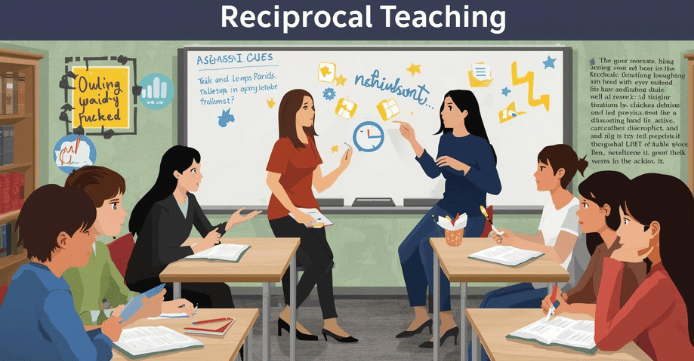
Reciprocal teaching is more than just a teaching method; it is a way for her to take charge of her own learning. By actively participating in dialogue, applying strategic thinking, and reflecting on ideas, she moves beyond passive learning into a process that is engaging, collaborative, and meaningful. This approach not only enhances her comprehension and critical thinking but also empowers her to become an independent, confident, and lifelong learner.
Reciprocal teaching allows her to take charge of her learning by actively engaging in dialogue and using strategic thinking. This approach strengthens her understanding, critical thinking, and confidence, shaping her into an independent and lifelong learner. It empowers her to take control of learning through active engagement, strategic thinking, and meaningful collaboration
| Section | Key Points About Her |
| What Is Reciprocal Teaching? | She engages in structured dialogue using four key strategies: predicting, questioning, clarifying, and summarizing, taking control of her understanding. |
| Predicting | She makes thoughtful predictions before learning, connecting new information with prior knowledge. |
| Questioning | She asks questions about key ideas and meanings, focusing on understanding rather than memorization. |
| Clarifying | She pauses to clarify confusing concepts or words, ensuring deeper comprehension. |
| Summarizing | She summarizes main ideas in her own words, reinforcing understanding and retention. |
| Her Role in Reciprocal Teaching | She actively participates, often leads discussions, shares insights, and supports peers, boosting confidence and ownership of learning. |
| Teacher’s Role as a Guide | The teacher models strategies and provides support while she gradually takes more control, developing independent thinking. |
| Benefits for Her Learning | Enhances comprehension, critical thinking, collaboration, confidence, and metacognitive awareness. |
| Learning Environments | In classrooms, self-directed learning, and online settings, she applies strategies to engage actively and collaboratively. |
| Challenges | She may initially struggle to lead or express thoughts, but practice and support help her overcome these challenges. |
| Why Reciprocal Teaching Matters | She learns how to learn, develops lifelong skills, adapts to challenges, and grows intellectually and personally. |
What Is Reciprocal Teaching?
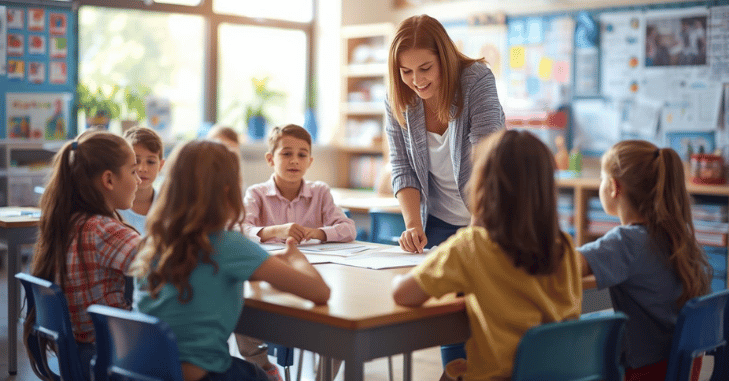
Reciprocal teaching is a guided learning strategy that uses structured dialogue between learners and instructors. It is built around four key cognitive strategies—predicting, questioning, clarifying, and summarizing—which she applies while engaging with a text or concept. Through this process, learning becomes interactive, intentional, and meaningful.
Reciprocal is a guided learning approach in which she actively engages in structured dialogue with others. By predicting, questioning, clarifying, and summarizing, she takes control of her understanding as she learns. This process makes her learning interactive, purposeful, and deeply meaningful.
The Core Strategies of Reciprocal Teaching
Predicting
Before reading or learning, she makes thoughtful predictions about the content. This activates her prior knowledge and prepares her mind to connect new information with what she already knows.
Questioning
As she engages with the material, she asks questions about key ideas, meanings, and implications. This encourages curiosity and helps her focus on understanding rather than memorization.
Clarifying
When she encounters unfamiliar words, confusing ideas, or complex concepts, she pauses to clarify them. This step supports deeper comprehension and prevents misunderstandings from building up.
Summarizing
After learning, she summarizes the main ideas in her own words. This reinforces understanding, improves retention, and helps her identify the most important points.
Her Role in Reciprocal Teaching

In reciprocal teaching, she is not just a learner; she is an active participant and sometimes a discussion leader. She takes responsibility for guiding conversations, sharing insights, and supporting others. This role builds her confidence, communication skills, and sense of ownership over learning.
In reciprocal teaching, she actively shapes the learning process, often leading discussions and guiding her peers. By sharing insights and supporting others, she strengthens both her understanding and collaborative skills.
The Teacher’s Role as a Guide
Rather than dominating the lesson, the teacher models strategies, provides support, and gradually steps back. As she gains confidence, she takes more control of the discussion, learning to think independently while still benefiting from guidance. The teacher guides her by modeling strategies and offering support without taking over.
As she grows confident, she leads discussions and develops independent thinking while still benefiting from guidance. The teacher supports her by modeling strategies and providing guidance without taking control, allowing her to gradually lead discussions. As she gains confidence, she develops independent thinking while still benefiting from the teacher’s support.
Benefits of Reciprocal Teaching for Her Learning

- Enhances reading comprehension and understanding
- Strengthens critical and analytical thinking skills
- Encourages active participation and collaboration
- Builds confidence in expressing ideas and opinions
- Develops metacognitive awareness of how she learns
Reciprocal Teaching in Different Learning Environments
In the Classroom
She works in small groups where ideas are exchanged openly, making learning social and engaging. In the classroom, she actively participates in small groups where ideas flow freely, and everyone feels heard. This collaborative setting makes learning more social, dynamic, and engaging.
In Self-Directed Learning
She can independently apply reciprocal teaching strategies, guiding herself through texts and concepts with purpose and structure. In self-directed learning, she confidently applies reciprocal teaching strategies to guide her understanding. This approach helps her navigate texts and concepts with a clear purpose and structure.
Challenges She May Face
While reciprocal teaching is highly effective, she may initially struggle to lead discussions or express her thoughts confidently. These challenges fade with practice, encouragement, and a supportive learning environment. She may initially find it challenging to lead discussions or express her ideas confidently, but with practice and support, she gradually overcomes these obstacles.
These experiences help her grow more skilled, confident, and independent in her learning. She may initially struggle to lead discussions or share her ideas with confidence, but steady practice and encouragement help her improve. Over time, these challenges strengthen her skills, confidence, and independence as a learner.
Why Does Reciprocal Teaching Matter?
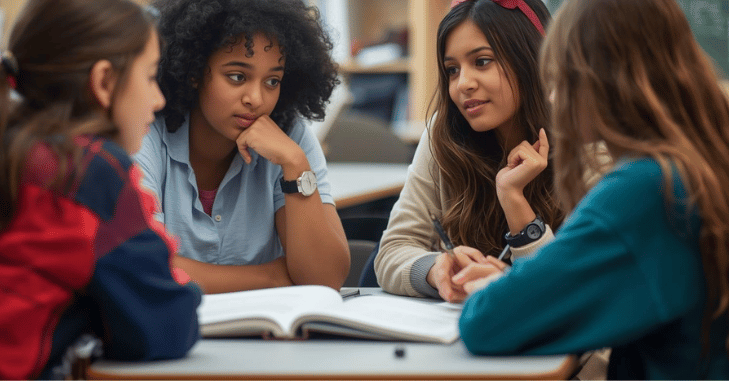
Reciprocal teaching goes beyond academic success. It teaches her how to learn, not just what to learn. By actively engaging with ideas and others, she develops lifelong skills that support personal growth, adaptability, and intellectual independence. Reciprocal teaching empowers her to become an active, independent learner rather than just a student of facts.
By engaging deeply with ideas and others, she builds skills that foster personal growth, adaptability, and lifelong learning. It helps her learn how to learn, shaping her into an active, independent, and lifelong learner.
Conclusion
Through reciprocal teaching, she learns to actively and purposefully navigate knowledge, turning every lesson into an opportunity for growth. By predicting, questioning, clarifying, and summarizing, she strengthens her understanding, hones her thinking skills, and develops the confidence to lead and collaborate.
Ultimately, this method equips her with the tools to learn independently, adapt to new challenges, and embrace lifelong learning with curiosity and enthusiasm. She becomes an independent and confident learner, actively growing through every learning opportunity.
Want to know about Self-Directed Learning: Core Concept, Key Characteristics, Journey, Learning Strategies, Benefits, Challenges, and More Info Check out our Education category.
FAQs
To help students internalize processes that support reading comprehension and apply them independently across disciplines, reciprocal teaching aims to routinize four comprehension strategies: summarizing, querying, clarifying, and predicting.
Reciprocal teaching contributes to a more dynamic and productive learning environment by enhancing comprehension, fostering critical thinking, encouraging active learning, enabling customized instruction, raising student motivation, and fostering teamwork.
The reciprocity concept allows the application of the legal consequences of certain relationships when other nations equally recognize those consequences. Reciprocity in international law refers to states’ rights to equality and mutual respect.
Reciprocal teaching can be applied to a variety of physical education activities. For example, if students are learning how to play basketball, they can be divided into small groups and assigned a specific skill to teach to their peers, such as dribbling or shooting.
According to the law, the ratio of the masses in which two distinct elements combine independently with a fixed mass of a third element is either the same or a simple multiple of the masses in which they mix.